Welcome to the School of International Education!

- 关注公众号StudyatHdu

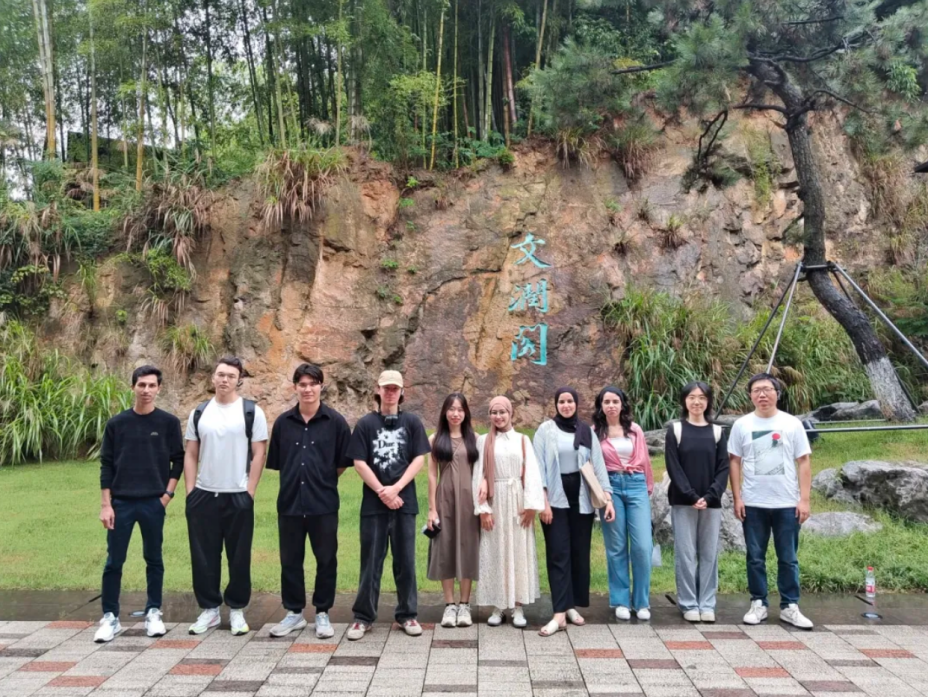
To deepen international students' understanding of Chinese culture, on June 10th, more than 10 representatives of faculty and students from the college visited the Hangzhou National Version Library to carry out a traditional culture experience activity. Using version culture as the carrier, the activity showcases the inheritance and innovation of the Chinese cultural heritage through immersive experiences, and builds a bridge for international students to understand Chinese culture.
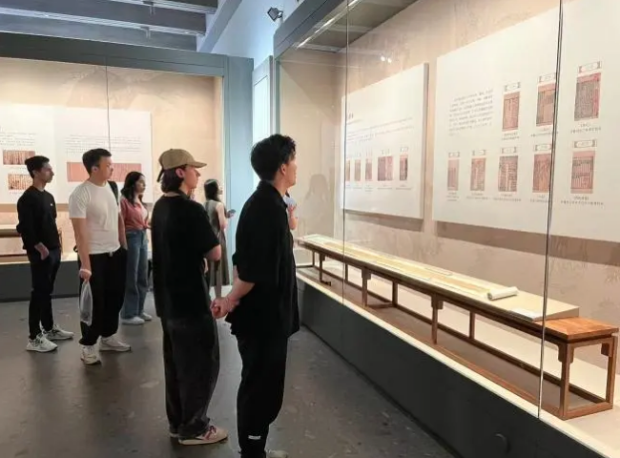
The Hangzhou National Edition Library is designed with the concept of "Modern Song Style," skillfully blending classical aesthetics with modern architectural techniques. Stepping into the library, the visual impact of the stone gray walls and the inverted solid wood columns is astonishing to teachers and students. International students visited in turn the Library of Literature—a general overview of the Jiangnan version culture, the Zhejiang Cultural Research Project Library, the Zhejiang Painters' Gallery of Zhejiang Famous People, and the digital exhibition hall, gaining a deeper understanding of the meaning of "version," the development context of Jiangnan version culture, and the concepts of contemporary version culture. The international students paused in front of the classical library of ancient books crafted by intangible cultural heritage crafts, experiencing the historical depth of Zhejiang as the "Land of Literature" through ancient books, carved cultural relics, and ink wash paintings.
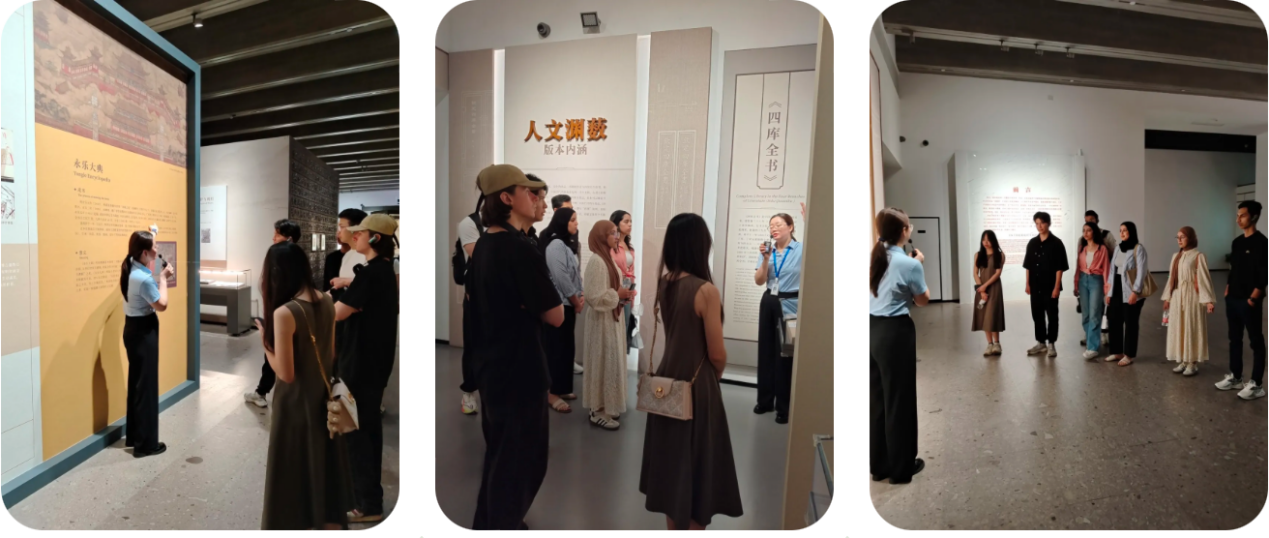
In the Song-style architectural complex of the Hangzhou National Library, a cultural dialogue spanning time and space has quietly unfolded. International students are either stopping in front of the digitized replicas of the "Four Books and Five Classics" shelves or gathered around the interactive "digital ancient books" screens, with their fingertips gliding, where oracle bone script, bamboo strips, and woodblock printing versions come to life before their eyes. Inside the exhibition hall, the four major thematic exhibitions such as "The Land of Literature" and "The Prosperous Zhejiang Learning" present the cultural context of Zhejiang in a multi-dimensional way through physical objects and digital interactions. International students participate in the "One Hundred Families" interactive experience by scanning QR codes to further trace the cultural roots; they challenge classical and historical questions in front of the large screens, building a dialogue between ancient and modern times in a game-like manner. Through exhibits of cultural relics, documentaries, introductions to cultural relics, architectural models, multimedia, and explanations by professionals, they have felt the charm of Song-style architectural styles, Zhejiang symbols, the characteristics of the江南 region, and the cultural features of the Yangtze River basin. They have deeply understood the heritage and profound foundation of Zhejiang culture.
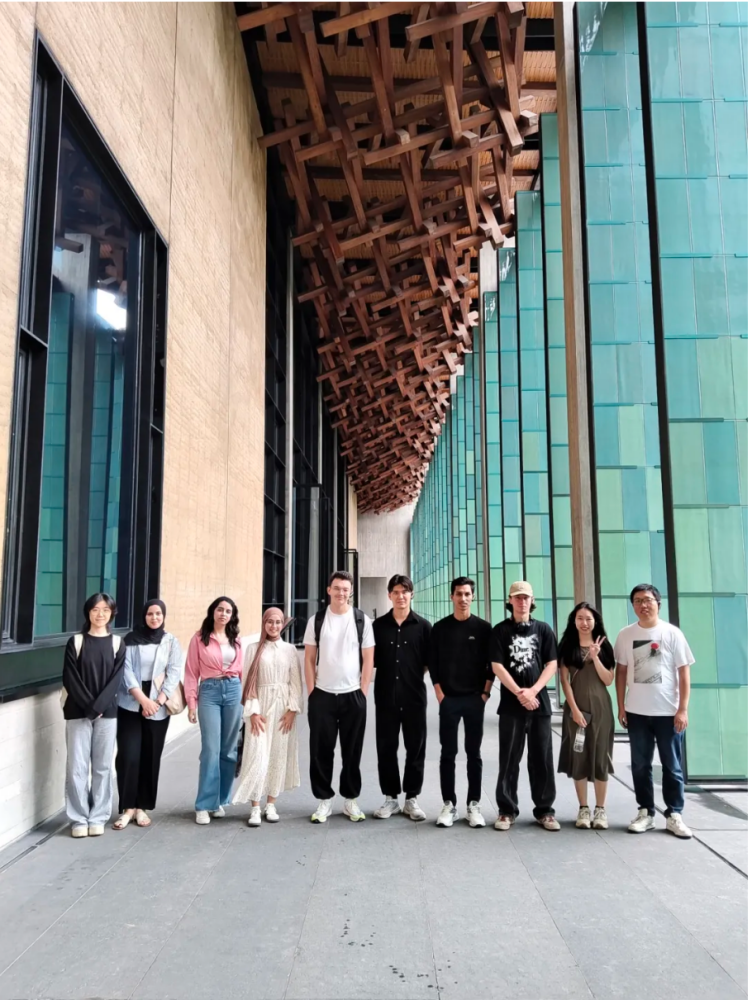
Through this activity, international students have further understood the Chinese history and culture as well as the profound historical heritage of Zhejiang. In the future, the college will innovate the educational experience activities for international students on the national conditions of China, guiding them to perceive Chinese culture from multiple perspectives and tell Chinese stories well.